big data and intelligent computing for smarter cities.
BD4UI is led by Prof. Senzhang Wang at the School of Computer Science and Engineering,
Central South University. Our research spans smart cities, machine learning, graph data
mining, spatio-temporal data mining, recommender systems, and large language models. We
welcome graduate students, Ph.D. candidates, research interns, and collaborators interested
in urban intelligence and data mining.
Urban Intelligence GraphMobility · POI · Road Network · Events
About BD4UI
Advisor and Lab Overview
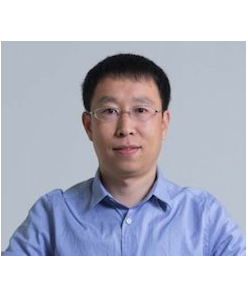
Senzhang Wang
Professor, Ph.D. Supervisor · School of Computer Science and Engineering, CSU
Prof. Wang's research interests include smart cities, machine learning, graph data mining,
spatio-temporal data mining, recommender systems, and large language models. He has published
more than 200 papers, including over 60 CCF-A papers. His work has received more than 10,000
Google Scholar citations, with an H-index of 58.
Received the 2025 First Prize of the China Industry-University-Research Collaboration Innovation Award and the 2022 Second Prize of the China Simulation Federation Science and Technology Award.
Selected for WSDM 2025 Top-Ranked Papers and received the PAKDD 2025 Most Influential Paper Award.
Selected for talent programs including Hunan Young Furong Scholar, Jiangsu Young Talent Support Program, NUAA Changkong Scholar, and Hong Kong Scholar.
Led more than 20 national, provincial, and industry-funded projects, and serves on multiple CCF technical committees and journal editorial boards.
200+Publications
60+CCF-A Papers
10000+Google Scholar Citations
58Google Scholar H-index
Research
Research Areas
01
Smart Cities and Spatio-Temporal Intelligence
We study forecasting, simulation, and decision intelligence for traffic flow, demand, congestion, air quality, and urban risk in city systems.
Smart city
Spatio-temporal forecasting
Traffic intelligence
02
Graph Machine Learning
We study graph representation learning, graph contrastive learning, and graph data mining for social networks, knowledge graphs, road networks, and heterogeneous urban entities.
Graph neural networks
Graph contrastive learning
Graph data mining
03
Large Language Models for Urban Intelligence
We investigate how LLMs support urban knowledge QA, planning assistance, multimodal understanding, graph reasoning, and explainable decisions.
LLM for urban systems
Agentic decision support
Multimodal reasoning
04
Recommender Systems and Machine Learning
We design recommendation, representation learning, transfer learning, and machine learning methods for user behavior, urban services, and multi-source data.
For data related to city operations, transportation, and industry collaborations, please contact the team by email and follow project-specific agreements.
The team recruits three master's students and one Ph.D. student each year. Our research focuses on
fundamental problems in big-data-driven smart cities and urban computing. We aim to publish high-quality
academic papers and build an influential domestic laboratory for big data analytics, mining, and knowledge discovery.
Ph.D. Students · 2023
Hao Yan
Direct Ph.D. track after master's study; interned at MSRA. Published one CCF-A NeurIPS 2023 paper, one CCF-A KDD 2025 paper, one CCF-B ACM TKDD journal paper, one CCF-B SDM paper, one CCF-B ECML-PKDD paper, and one CCF-B WSDM 2024 paper. Twice received the National Scholarship.
Ph.D. Students · 2024
Ming Cheng
Published one CCF-A NeurIPS 2025 paper.
Ph.D. Students · 2026
Jian Wang
Published one CCF-A AAAI paper.
Master Students · 2024
Zhigang Yu
Published one CCF-B CIKM paper and one CCF-B IJCAI paper; interned at Tencent.
Minjun Cao
Published one CCF-B IJCAI paper.
Keyi Yang
Submitted one CCF-B conference paper; interned at Sangfor.
Master Students · 2025
Ziluowen Luo
Published one CCF-B IJCAI paper.
Yuanbo Zhao
Current master's student.
Anqi Zhang
Current master's student.
Qi He
Current master's student.
Alumni
Alumni
2023 Cohort
Zichen Wang
Published one CCF-A AAAI 2025 paper; granted one patent; joined Alibaba; received the National Scholarship.
Ruochen Liu
Published one CCF-A NeurIPS 2024 paper and one CCF-A KDD 2026 paper; visited The Hong Kong Polytechnic University; pursuing a Ph.D. at The Hong Kong University of Science and Technology (Guangzhou).
Ronghui Xu
Published one CCF-A KDD 2024 paper, one CCF-A TKDE journal paper, and one CCF-A TMC journal paper; received the National Scholarship; joined Meituan.
2022 Cohort
Jun Yin
Published two CCF-A NeurIPS 2023 papers, one CCF-A WWW 2025 paper, and one CCF-A ICLR 2026 paper; interned at MSRA; received the National Scholarship; pursuing a Ph.D. at The Hong Kong Polytechnic University.
Renzhi Wang
Published one CCF-A AAAI 2023 paper; interned at Huawei and Alibaba; joined Agricultural Bank of China, Guangzhou.
Shunyang Zhang
Published two CCF-A IJCAI 2024 papers; interned at Alibaba; received the National Scholarship; joined Hunan Meteorological Information Center.
2021 Cohort
Jiangnan Xia
Visited The Hong Kong Polytechnic University for six months; published one CCF-A TKDE journal paper and one CCF-A AAAI 2025 paper; pursuing a Ph.D. at the University of Georgia.
Yandi Lun
Published one CCF-B journal paper; joined Meituan.
2020 Cohort
Jiaqiang Zhang
Published one CCF-A TKDE journal paper and one CCF-A IJCAI paper; entered a master's-to-Ph.D. program at Nanjing University of Aeronautics and Astronautics; joined Nanjing University of Information Science and Technology.
Jiyue Li
Published one CCF-A TKDE journal paper and one CCF-B CIKM paper; interned at JD Smart City Research Institute; joined Tianyi Digital Life Technology Co., Ltd.
Yi Liu
Published one CCF-B Journal of Cyber Security paper and one SCI journal paper; joined China Construction Bank.
Sen Zhang
Published one CCF-B ECML-PKDD paper; joined Anhui Bowei Chang'an Electronics Co., Ltd.
2019 Cohort
Meiyue Zhang
Published one CCF-B SDM paper and one JCR Q1 ACM TIST transaction paper; filed one patent; joined Alibaba.
Jinlong Du
Published one CCF-A IJCAI paper and filed two patents; interned at Alibaba Nanjing; joined Intel Shanghai.
2018 Cohort
Hao Miao
Recipient of the overseas Excellent Young Scientists Fund; interned at Tencent Maps; visited The Hong Kong Polytechnic University for three months; received a Ph.D. from Aalborg University, Denmark; currently Research Assistant Professor at The Hong Kong Polytechnic University.
Chengyu Yin
Won one Best Student Paper Award, filed two patents, won first and second prizes in the National Graduate Mathematical Contest in Modeling, interned at JD Nanjing Research Institute, and joined Anhui Normal University as a faculty member.
Join Us
Openings
BD4UI recruits master's students, Ph.D. students, and welcomes motivated undergraduates and visiting students interested in research.
Master Students
The faculty profile states that the team recruits three master's students each year. Students from computer science, mathematics, transportation, GIS, and related backgrounds are welcome.
Familiarity with Python, machine learning, or data mining
Interest in smart cities, graph learning, recommender systems, or spatio-temporal data
Ph.D. and Visiting Students
The faculty profile states that the team recruits one Ph.D. student each year. Visiting students with research experience are also welcome to contact us.
Stable weekly research time
Ability to define problems and advance experiments independently
Long-term interest in machine learning, graph mining, or spatio-temporal mining
Collaboration
We welcome academic and industry collaborations around smart cities, transportation intelligence, and trustworthy data sharing.
Joint research projects and grant proposals
Dataset co-construction and open evaluation
Algorithm deployment and system prototypes
Contact
Contact
Applicants may include a CV, transcript, representative project, or paper reading notes in the email.